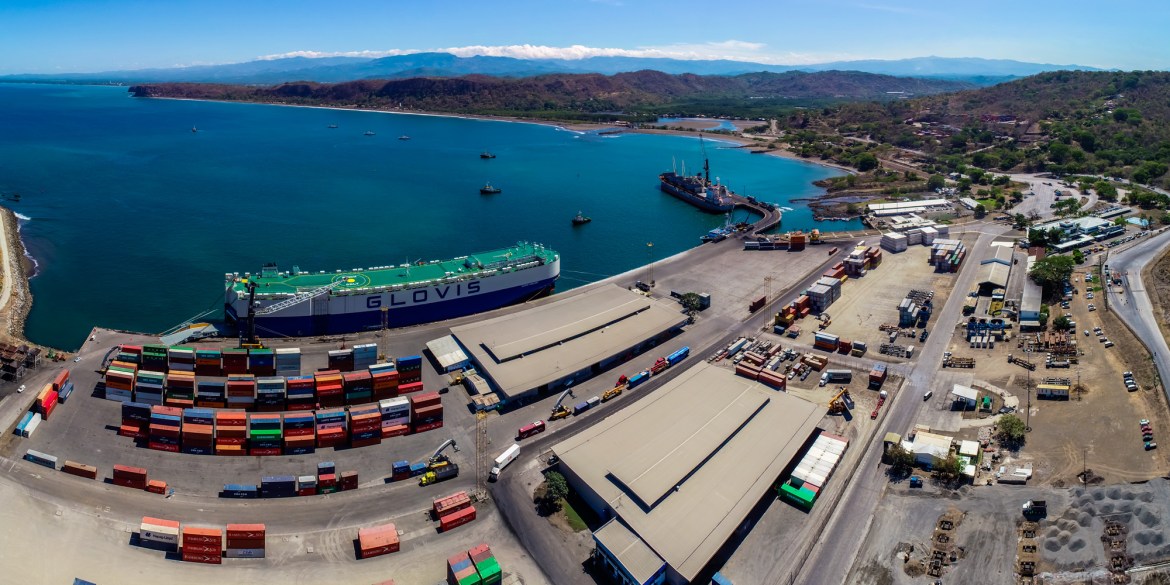
Frigorificos de Puntarenas, S.A. This consisted of a small fleet of fishing
boats based in the humid Pacific Coast village of Puntarenas
Gary Webb's book Dark Alliance gives details on Puntarenas
I am just now finishing Robert Tosh Plumlee's book Deep Cover, Shallow Graves - what a fantastic read!!
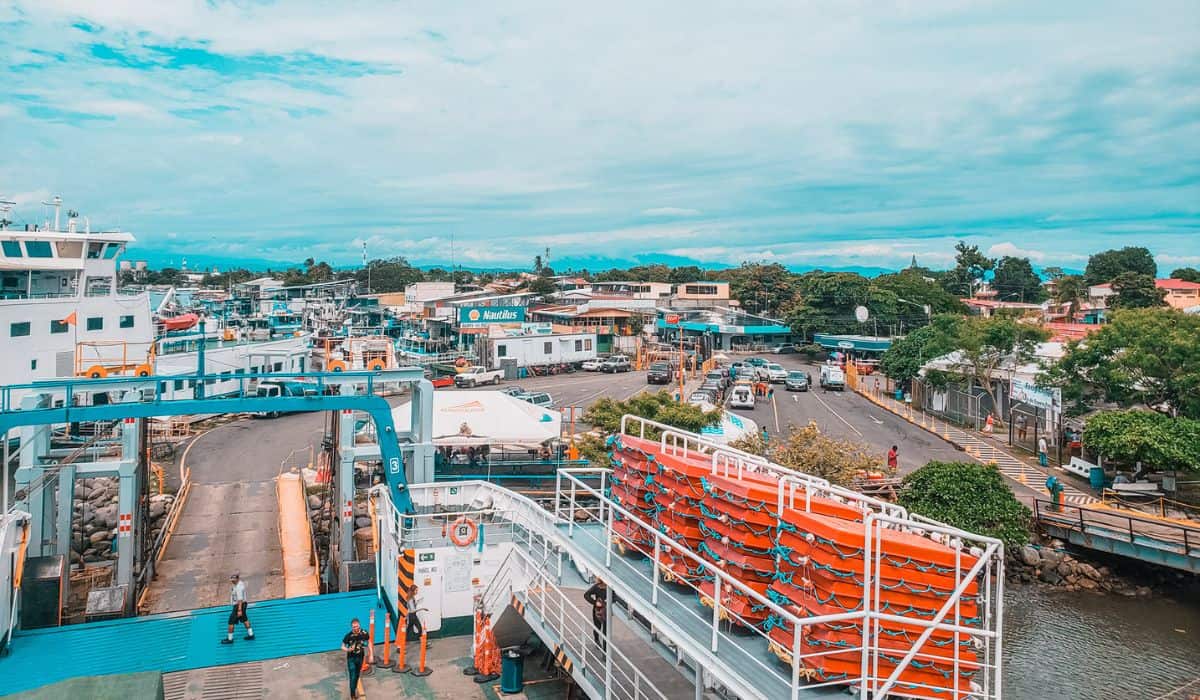
I happened to visit Puntarenas harbor port - one of the businesses - as one of my "sustainable development" trips in the School for Field Studies, 1992, Costa Rica Fall semester - I remember thinking something was "fishy" about that business! Wow - like I had some kind of psychic connection about it. I was very outspoken against the CIA while I was in Costa Rica - hahaha. I made a real stink about it.
https://mytanfeet.com/cities-costa-rica/puntarenas-pearl-costa-rican-pacific/
I'm trying to find a photo of what I saw when I was therehttps://www.costaricavibes.com/destinations/central-south-pacific/puntarenas/
hmmm
Former Medellín cartel accountant Ramon Milian Rodriguez, a suave Cuban-American who was the
cartel's money-laundering wizard until his arrest in Miami in 1983, when he and $5 million in cash were taken off a Lear jet bound for Panama. Frigorificos, he testified, was one of an interlocking chain of companies he'd created to launder the torrents of cash that were pouring into the cartel's
coffers from its worldwide cocaine sales. Drug money would go into one company and come out of another through a series of intercompany transactions, clean and ready to be banked or invested. In 1982, Frigorificos was taken over by a group of major Miami-based drug traffickers, who began using it to help the Contras.
"Were payments or arrangements made by which the Contras could receive money through Frigorificos?" Senator John Kerry asked Milian during a Senate subcommittee hearing in 1987.
"Yes sir," the accountant answered. "You arranged that?" "I, through my intermediaries, made it possible."
So it wasn't just using frozen shrimp as a physical cover for the cocaine flown into the u.s. military bases but rather the business itself laundered the drug money payments - very slick.
In February 1986, one of the Cubans working with North in Costa Rica, a longtime CIA contract agent named Felipe Vidal, devised a plan for a "small, professionally managed rebel naval force" that would serve as a supply line for the Contras, an intelligence-gathering operation, and a transportation unit "to infiltrate into the [Nicaraguan] mainland rebel cadres for specific missions."
Vidal recommended using a Costa Rican shrimp company as "a front" and getting two shrimp boats to act as motherships and to gather intelligence. "These boats could be acquired from U.S. government auctions," Vidal wrote, noting that "existing connections with a high-ranking official in the DEA would facilitate the purchase of said boats. The cost of these boats, with cooperation from the DEA, could come to as low as $10,000 per boat." CIA records show that Vidal was employed by Frigorificos at the time he proposed this scheme.
Vidal's "existing connections" with a top DEA official are fascinating, considering the Cuban's shady background. Vidal's criminal history "reflects an assortment of assault, robbery, narcotics, and firearms violations," the CIA Inspector General wrote, and included a 1971 drug conviction and a 1977 arrest for conspiracy to sell marijuana
See Robert "Tosh" Plumleee wondered who owned Frigorificos because the CIA insisted it was not one of their "front companies" - and so Plumlee asked - "well who was I working for then?" He knew it was the NSC as the CIA at a higher level - the "Enterprise."
The CIA later denied any relationship with the company or its owner. Which begged the question: Who was I really working for?"
p. 192, Deep Cover, Shallow Graves
"Moises Nunez, a Cuban who has a shrimping business in Punteranous [sic] is fronting the operation," Owen wrote North. "He is willing to have an American come work for him under cover to advise the operation. . .. If we can get two shrimp boats, Nunez is willing to front a shrimping operation on the Atlantic coast. These boats can be used as motherships. I brought this up awhile ago and you
agreed and gave me the name of a DEA person who might help with the boats."
In other words, in early 1986 the DEA was being asked to provide cheap oceangoing vessels to a company started by the Medellín cartel, run by drug traffickers, for espionage missions planned and fronted by drug traffickers.
The identity of Vidal's high-ranking DEA contact was not divulged, nor is it known whether the agency ever provided the boats, but records show the maritime operation was going strong in April 1986 and would soon be running "several trips a week," according to a memo Owen sent to North. Curiously, the Iran-Contra investigations barely looked at this clandestine operation, which was a clear violation of the Boland Amendment since, according to Owen, it directly involved CIA station chief Joe Fernandez.
Despite his background, Moises Nunez also maintained a chummy relationship with antidrug agencies, both American and Costa Rican.
I actually met a former Contra - he was probably part of the Rural Guard of Costa Rica. He was the "protector" of the forest reserve next to our School for Field Studies - he took me on a tour in the reserve. That's when I saw the Sloth!! I later then interviewed the locals around the "protected" park and they all bragged about hunting in that reserve. I then did a presentation arguing the locals should be paid to protect the reserve and my biology professor Pia Paaby then got this to be the national law.
A 1985 CIA cable described DIACSA as the "cover company" used by the Costa Rican Contras to secretly buy aircraft....the client turned out to be former Medellín cartel
accountant Ramon Milian Rodriguez—the man who had set up the Costa Rican shrimp company Oliver North would later use to funnel money to the Contras
a Nicaraguan pilot named Marcos Aguado.....Aguado, the chief pilot for the ARDE Contra forces in Costa Rica, was identified in 1987 congressional testimony as a CIA agent. Soon after North set up his resupply operation at the air base, Aguado moved to Ilopango permanently, working as an aide to a high-ranking
Salvadoran air force commander. The pilot, who had been instrumental in arranging the Contras' 1984 arms-and-drugs deals with Colombian trafficker George Morales,
was no longer welcome in Costa Rica, having been formally accused of cocaine trafficking. "Aguado became a colonel in the Salvadoran Air Force, sharing all the privileges of a high-ranking military officer in El Salvador and was accepted by subordinate ranks as Deputy Commander of the Salvadoran Air Force,".........
Costa Rican attorney Gloria Navas, a former prosecutor and judge who advises the Costa Rican Legislative Assembly on drug issues, strongly believes that the DEA agents stationed in Costa Rica during the Contra war were not what they appeared. "In my opinion, both Nieves and Sandy Gonzalez were connected with the CIA. There is no doubt," insisted Navas....At the time DEA agents Nieves and Gonzalez were stationed in Costa Rica, the CIA station chief was Joe Fernandez, a close friend and confidant of North who was
later forced to resign from the CIA for his illegal involvement with the Contras.
https://webhelper.brown.edu/cheit/Understanding_the_Iran_Contra_Affair/profile-fernandez.php
In August 1985, Fernandez worked with North and private Contra benefactor (and former CIA operative) Rafael Quintero to build an airstrip in a remote area of Costa Rica. The purpose of this strip was for emergency landings and to allow Contra-supply planes to refuel on the way to the base in El Salvador. In addition, through an NSC communication device North had given him, Fernandez informed them both about the Contras' needs, as well as flight path and drop-off coordinates. Fernandez even enlisted CIA field personnel in 1986 to select the best drop-off sites and share that information with him; he then passed that knowledge on to Quintero and North.
After the crash of Eugene Hasenfus's plane, which was carrying weapons to the Contras, Fernandez asked a Department of State employee to remove records of his phone calls with North and Quintero, of which there were hundreds. The employee placed them in a personal safe.
In early 1987, Fernandez was repeatedly interviewed and consistently provided false information, leading to his indictment. Walsh indicted him on the grounds that he falsely claimed the airstrip was a Costa Rican initiative designed to defend against possible Nicaraguan invasion rather than to refuel supply planes.
https://irp.cdn-website.com/6b820530/files/uploaded/Dark_Alliance.pdf
the locations of thirty-two cocaine labs in Costa Rica and some personal papers of the DEA agents, including their radio code names—Jaguar 1, 2, and 3. ... DEA agents in Costa Rica knew the location of drug laboratories and had
been paid to conceal the location of narcotics....maps of coke lab locations in Costa Rica but is protecting them. One large lab located in southern Nicoya. And another in Talamanca
region.... yard full of Costa Rican Rural Guards armed with AK-47 assault rifles
So that is who showed me around the "protected park" - a former Costa Rica Contra Rural Guard! wow....
Nieves went to work for a body armor manufacturing company in Virginia—Guardian
Technologies. That company is owned by Oliver North, and the CIA's former chief of station in Costa Rica, Joe Fernandez....
One of those programs appears to have been the secret Contra maritime operations North
and CIA station chief Joseph Fernandez were running in Costa Rica, using Kevlar speedboats and offshore shrimp trawlers as motherships. As discussed in an earlier chapter, those murky missions were being spearheaded by two CIA-linked drug traffickers working with the Southern Front Contras—Bay of Pigs veterans Felipe Vidal and Dagoberto Nunez. In an interview with Iran-Contra prosecutor Lawrence Walsh's office, Pino confirmed that he and Bode met with North to discuss the purchase of the
speedboats. During that meeting, Pino said, North unexpectedly announced that he could wind up behind bars. "North did refer to going to jail," Pino confirmed, but he said his "impression was that the phrase was common usage in the military before an inspection."...
Colonel Pino, another Bay of Pigs veteran, has a history of involvement with the CIA and covert operations. In 1982 he became the U.S. Army's "action officer" on the civil war
in El Salvador. Pino was a close friend of former CIA agent Felix Rodriguez, who was overseeing North's Contra rcsupply operation at Ilopango air base in El Salvador at the time. Rodriguez, in fact, says he first met Ollie North through Bode and Pino. Like Rodriguez, Pino was close to Salvadoran Air Force general Rafael Bustillo, who ran the Ilopango base. ....
On December 21, without waiting for DEA approval, Meneses and his new partner, the longtime CIA agent "Roberto," left Costa Rica and flew to the United States. Officially, they were on a mission for the Costa Rican DEA: penetrate Blandón's organization and gather intelligence about its activities, under the code-name "Operation Perico." But it appears there were other factors behind the DEA's sudden urge to insert Meneses and the CIA agent into Blandón's organization: to avoid the embarrassment of
Meneses falling into the hands of the Costa Rican police and, more importantly, to gather intelligence on just what the impending federal task force investigation in L.A. could expose if it delved too deeply into Blandón's drug ring....
At this time, Lister explained how he and the CIA used to transport multi-hundred kilo loads of cocaine from Cali, Colombia and Costa Rica to the U.S." The DEA agent wrote that Lister had a paper in his hand that "appeared to be a copy of an outgoing wire transfer. On it, the agent noticed the following: 'Swiss Bank of New York, World Trade Center, #101-WA' (the rest of the numbers not obtained.)"......
Miranda unwittingly led the police to Frank Vigil, the former advertising man who'd allegedly dealt cocaine with Blandón in L.A. in the early 1980s and was Meneses's partner in the Costa Rican chicken restaurant. Mayorga learned that Vigil had just formed a new company in Managua in partnership with a major Colombian drug trafficker, Hector Roman Carvajal....
I [Gary Webb] wrote a sidebar about the drug-dealing Costa Rican shrimp company North and the Cuban CIA operatives were using to funnel aid to the Contras.
John Hull—Bill Casey's friend and Oliver North's liaison to the Contras—had escaped from Costa Rica after he was indicted there for drug trafficking in 1989. After being thrown in jail, Hull was let out on bail for health reasons and vanished.
The DEA office in Costa Rica had gotten Hull out, Lippert said. Lippert had flown the mission himself, in a decoy plane hopscotching from Costa Rica to Haiti and then shuttling Hull into Miami, where Hull hid at the apartment of Cuban CIA operative and suspected drug dealer Dagoberto Nunez, who'd helped North and the CIA in Costa Rica.
https://oig.justice.gov/sites/default/files/legacy/special/9712/ch11p2.htm
John Hull's ranch, alleging that it was protected by the CIA and that Hull took advantage of this protection and allowed planes loaded with cocaine to land there, charging $10,000 per landing.
in November 1986, a DEA informant reported that Colombian cocaine was offloaded at an airstrip on Hull's Costa Rican ranch and then transported into the United States concealed in a shipment of frozen shrimp. Francisco Chanes was a director and registered agent of "Mr. Shrimp," a Miami-based company alleged by the source to have received the shipments.
John Hull was neither an official employee nor an undercover officer of the CIA; rather, he functioned as a "cut-out" and a contract operative for the U.S. government

No comments:
Post a Comment