
https://www.youtube.com/shorts/K_OlZ3YmdHU
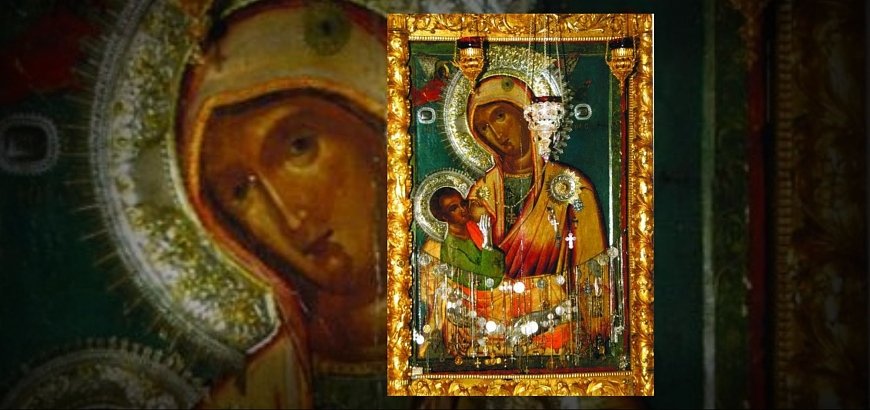
The Milk of Salvation: Redemption by the Mother in Late Antiquity and Early Christianity GP Corrington - Harvard Theological Review, 1989
«Blessed is the womb that bore You, and the breasts which nursed You!» (Luke 11:27). https://www.monastiriaka.gr/en/blog/panagia-galaktotrophousa-the-virgin-lactans-or-milk-nursing

I had never heard of "Witch's Milk" before until I studied the science of milk production by female mammals. You probably haven't heard of it either! It's when the mother's hormones are still dominant in the baby and so the baby has extra large mammary glands - even for a boy! - and secretes milk...
The last stage of development occurs during menopause, when the decline in estrogen secretion results in some atrophy of mammary tissue.
In alchemical meditation the Jing is the electrochemical hormone energy but it originates from biophoton signals - and so the "Yuan Jing" is the key to the Green Dragon as creating the golden "yang shen" immortal body. In Christianity this is the resurrection - from the Logos as the Holy Spirit of God, now made a physical human as Jesus (Joshua)...
Yes,Jesus and the Old Testament figure Joshua share the same Hebrew root name, Yeshua (or Yehoshua), which means "Yahweh is salvation". While "Joshua" is the English translation of the Hebrew name, "Jesus" comes through the Greek transliteration (Iesous)
As critics of Christianity have pointed out - the earliest Christian writings consider Jesus to be existing in a supernatural spiritual realm. But Christianity does not assume each human is inherently immortal otherwise they would not have any reason to become Christian - to worship Jesus as their Savior. In other words the process of becoming immortal in Christianity is inherently tied to the Second Coming as the resurrection of Christian physical bodies to be immortal like the body of Jesus - what is called the "Yang Shen" in Daoism or in Buddhism the Nirmanakaya
TheNirmanakaya (emanation or manifestation body) is the physical form of a Buddha that appears in the world to teach, such as Siddhartha Gautama. While it appears to be born and die, it is often considered an emanation of the eternal Dharmakaya. It is the most apparent aspect of the three bodies (Trikaya
Professor Robert Price even has a chapter in his Judaizing Jesus book about the claim that the "therapeutae" schools of 2nd temple Judaism that spread to Egypt - being Hellenized but also relying on Buddhism from Buddhist monks...
Now back to the phenomenon of Jing energy - we know that embryos all start out as female in the womb. This means the male reproductive organ actually originates as a clitoris and female hyenas for example have a seven inch clitoris due to an increase in testosterone!
So the jing energy is built up through the alchemical meditation process - as "yin qi" (negative ions) that feed back into "yang qi" (positive ions) while the pineal gland converts blood into increased cerebrospinal fluid that stores the charge of the yang qi. The yuan qi is the origin of this process as the magnetic moment of the virtual photons that are nonlocal (both inside and outside the body and the future and the past overlapping). When you see blue light while meditating this is that soul energy manifesting just as the element gold relies on blue light that is absorbing virtual photons. So the "yang shen" immortal body is seen externally as a golden bright light body that can walk through walks - or walk through rocks (as Jesus was described to be able to do after his resurrection)....
https://publisherspanel.com/api/files/view/483897.pdf
Virgo lactans, the Nursing Virgin,
So by studying the biological miracle of lactation we discover that female mammals can be encouraged to produce milk just by strong nerve stimulation - bioelectromagnetic energy that can be activated by physical suckling....
The iconographic formula, formerly considered to have originated in Egyptian images of Isis breastfeeding the infant Horus
We can refer to D.M. Murdock's classic tome, Christ in Egypt for more alchemical details. That is some AI summary of the book I think...
So the "Lamb of God" metaphor reminded me of when I helped eight lambs be born in the winter or early Spring - and one lamb was rejected by his stressed out mom (who had her hormones messed up obviously). So he ran around to literally try suckling on EVERY other lamb - finally finding a mom to be his wet-mother. I am assuming she also had new lambs but I don't remember....
Yes, wet nurses are historically and conventionally recent mothers who are actively lactating. They usually require a recent pregnancy to initiate milk production to feed the infant. While some women may induce lactation or maintain a milk supply without a recent birth,
In Pagan Origins of the Christ Myth, John G. Jackson proposed that Chi-Rho was of Egyptian origin which he based on the work of Sir Flinders Petrie, who stated that:
“the monogram Chi-Rho was the emblem of the Egyptian god, Horus, thousands of years before Christs.”
DM Murdock addresses this subject when she writes:
“The apis embalming ritual recognizes the dead soul as ‘becoming’ the role of Osiris and after its purification (of the body) the resurrection of the soul which becomes the role of Horus (as the morning sun).”[1]
Horus then, is the representation of the resurrected Sun reborn daily, he is the Lord of the two horizons from the mount of sunrise (Bakhau) to the mount of Sunset (Manu), he is lord of two lands, he is the uniter of North and South and his symbols attest to his nature as the lord of the Sun
[1] D.M Murdock, Christ in Egypt: The Horus-Jesus Connection ( Stellar House Publishing, 2009), p.250.
“…the sinking sun could be imaged naturally enough by the beetle boring its way down through the earth.”[1]
In her book Christ in Egypt, D.M. Murdock argues that ‘Lamb of God’ was both a reference to Sol in Aries, and an epithet of Horus. Other related epithets “the golden calf”, the lamb, “son of a sheep” invoke Horus in his aspects as protector and savior of souls (on Earth and in Amenti).[2] Murdock recognizes these epithets in terms of astro-theological concepts and their relationships to the zodiacal motions of the Sun.
[1] Massey, Ancient Egypt, p.10.
[2] Murdock, Christ in Egypt, pp. 331-332.
The cross as a symbol of the sun relates back to the sun’s crossing the sky and being hung on a cross during equinoxes. The crucifixion of the sun in its astro-theological context is expressed as the solar orb on the horizon as the sun crosses the sky. Sunrise is the time of “horus who crosses the sky”. The cross also symbolized the sun God “crossing the two lands of night and day”.[1]
The labarum is comprised of the two Greek letters Chi-Rho (Xp). Its reversal symbolized as Px, more popularized as Rx, the symbol of recipe. In the British Medical Journal, Jeff Aronson argues that Rx is derived from the Egyptian symbol of the utchat, the eye of Horus the Elder. In the story of Horus the Elder, he had two eyes, one was the sun and the other, the moon.
That is the same teaching as Daoist Neidan alchemy!
Set stole the sun eye of Horus and cut pieces off of the moon eye of Horus, which Thoth renewed each month. Due to the restoration, “the eye of Horus became a potent symbol of good fortune and healing, later adopted by Greeks, Arabs and others.”[1]
Much like Horus, Asklepios had the power to heal by resurrecting the dead. Asklepios was a Greek god of medicine and healing who bore a caduceus for whose healing he was renown as the serpent-bearer or the serpent-healer. According to the myth of Asklepios so skilled was he in the art of healing that he was able to grant the restorative powers of immortality to the deceased. This angered Hades who prodded Zeus to take action. In response Zeus struck Asklepios down dead. Afterwards he placed Asklepios in the sky as the constellation Ophiuchus, ‘serpent-bearer’ and ‘rod of Asklepios’. Following this action Zeus decreed that all curatives henceforth were palliative only. Various artistic renderings of the labarum bore similitude with serpentine symbolism for the very reason that as Murdock alludes to, Chi-Rho was associated with the serpent-healer archetype and the Chrestos, the savior-healing principle.[2]
[1] Jeff Aronson, “When I Use a Word…X Marks the Spot.”. BMJ: British Medical Journal 318, no.7197 (1999): 1543 http://www.jstor.org/stable/25184858
[2] Truth Be Known, “Chi-Rho Chrestos”. last modified 20 Jan 2018, http://www.truthbeknown.com/chi-rho-chrestos.html
The natural contradiction between Mary’s virginity and her breastfeeding was addressed by Clement of Alexandria (d. 215) in The Paedagogus (Παιδαγωγός), in which milk was considered in terms of metaphysics and the Passion, e.g. “
"The blood of the Word [LOGOS] has been also exhibited as milk”
or
“The same blood and milk of the Lord is […] the symbol of the Lord’s passion and teaching”.
Christ is presented as the
heavenly milk and Christians as the infants that feed on it: By a dewy spiritReason’s [Logos] breast distilled;
Let us sucklings join to raise
The title Theotokos was first used by Origen (d. 254), who in his lengthy Commentary on the Epistle to the Romans repeatedly referred to Mary as the “Mother of God” or the “Mother of the Saviour”. Origen’s phrases were borrowed by Athanasius (d. 373), who developed the teaching on Mary’s divine motherhood and her perpetual virginity; hence the epithet the “Ever Virgin” (Aeiparthenos).13
After Mary was recognised as the Mother of God (Thetokos), over the 6th and 7th
century the emphasis gradually moved towards Christology aligned with the teachings of the Council of Chalcedon (451)......
In his Sermon on the Annunciation, Sophronius, the patriarch of Jerusalem
(d. 638), was more explicit: “[…] when God became man, when God was conceived
without semen, when God was born from a woman, when God suckled milk from
a woman’s breasts”.21 John of Damascus expressed this thought in a similar manner:
“From thee, the Creator was born, the elements of our human matter. His body
sprang from thine body, His blood from thine blood. God fed on thine milk”.22
The motif of Jesus being breastfed does not disappear in the middle-Byzantine
literature altogether, but, similarly to the period before the iconoclasm, it is seen
relatively rarely. Among the few examples is the phrase in the Hymn to the Most Holy
Mother of God by John Kyriotes Geometres (d. ca. 990): “Hail, o thou who have fed
the Giver of food! Thine radiant breast nourished one of the three Divine Persons like
a wellspring”.23
the shape of the Virgin’s breasts and the position of the Infant’s head are clearly discernible.
a depiction of the Return from Egypt, in which the Virgin is portrayed riding a donkey and breastfeeding the Infant held in her lap.
The Milk of Salvation: Redemption by the
Mother in Late Antiquity and Early Christianity
Gail Paterson Corrington
Harvard Theological Review / Volume 82 / Issue 04 / October 1989, pp 393 - 420
DOI: 10.1017/S0017816000018563, Published online: 10 June 2011
the saved participates in the power of the savior by identification with, or adoption by, that savior, who thus is the "parent" of the saved. .. divine Mother, the goddess Isis.
Apuleius of Madaura, the second-century author who tells us that he had been
initiated into many of the salvation mysteries of the Greco-Roman World {Apol.
55), writes in his novel, the Metamorphoses, that Isis, the conqueror of hostile
Fortune {Met. 11.15), is also the divine and compassionate mother who assists
her unfortunate human children.

Förster’s initial interest was due to photosynthesis, as plants held a remarkable efficiency in energy absorption. Förster also showed unparalleled foresight when he considered that the same energy transfer he was considering could explain DNA damage from radiation or ultraviolet light. This is incredible, given that the structure of DNA was not discovered until 1953. Förster reasoned that this type of energy transfer was too far apart for atomic collisions to give the kind of efficiency observed, but too close together for the emission and reabsorption of an “assimilation unit” (i.e. a photon)
the quantum mechanical treatment of collisions accounted for the correct relationship of resonance between the donor and acceptor. That is, Förster was able to remove the need for exact resonance asserted by the Perrins. Next, Förster’s comparison of different dipole models allowed for the description of the so-called overlap integral....confirmed the dependence of energy transfer on the spectral overlap. [44]
https://pmc.ncbi.nlm.nih.gov/articles/PMC7679057/
Lowering pH proved to suppress the luminescence, which returned after addition of sodium bicarbonate. This experiment demonstrated that the luminescent substance could, at least in principle, be extracted. A surprise came when he saw a bright blue flash after discarding the extract in a sink that was shared with aquarium overflow.,...chromophore within the protein molecule; at the time most known fluorescent proteins were a complex of a protein and a fluorescent compound. This allowed him to isolate the three amino acids that made up the chromophore...
A non-commutative spectral theorem
A Spectral Theory Of Noncommuting Operators Textbook © 2024

The musical symbols for sharp () and flat () were introduced into Riemannian geometry—specifically in the context of tensor analysis on manifolds—as a notation for "musical isomorphisms", which are mappings between the tangent bundle (vectors) and cotangent bundle (one-forms) induced by a Riemannian metric.The notation is generally attributed to French mathematician Marcel Berger, who used them in his work on Riemannian geometry to describe the lowering and raising of indices, as explained in his book A Panoramic View of Riemannian Geometry

The ♭: V → V* and ♯: V* → V notation uses musical symbols, which to me suggests an infinite time-travel loop between naming and selection of symbols :-) .
https://hsm.stackexchange.com/questions/13312/what-makes-the-musical-isomorphism-musical
traditional example of the Šilov boundary is given by the continuous harmonic functions on the closed disc....It is a subspace of the -algebra generated by U and V, which is of course nothing but the noncommutative torus .
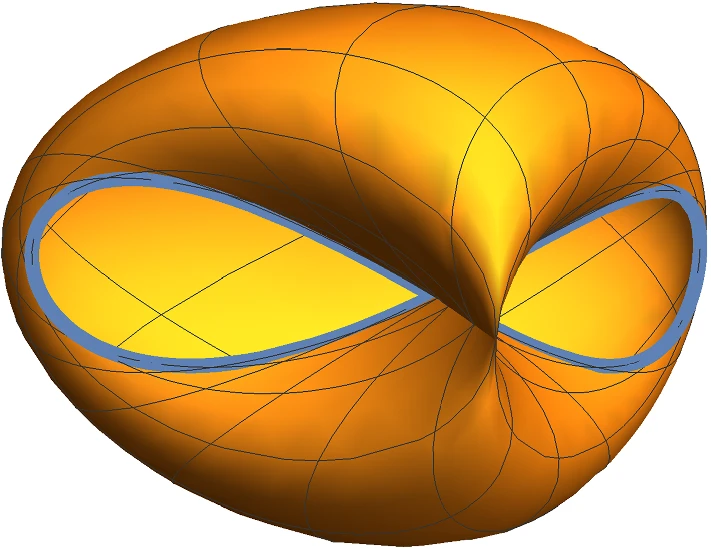
While extraordinarily successful, this framework often compresses spectral information into global homological invariants,
As a cow-headed deity like the goddess Hathor, Isis is known as
Hesat or Sechat-Hor, "the place where Horus dwells." 20 Horus, the son of this
deity, is incarnated as pharaoh. Hesat (Greek Hesis = Isis) is the incarnation of
the throne. Thus Isis is often pictured in the earlier Egyptian iconography wearing the hieroglyph for "throne" on her head (see PI. 1). ...this image of the
infant king, seated on the "throne" of his mother's lap, being manifested to the
world, that appears to be the dominant one in early Christian iconography of
Mary and the infant Jesus, for reasons that will later be suggested.
Although there were many divine
nurses in ancient Egypt, including Hathor, the "divine cow," the preeminent
nursing deity is Isis, who from the period of Middle Kingdom (2000-1280 BCE)
onward, and even more so in Ptolemaic and Roman Egypt, takes over this role
from the other divine nurses. 23 The infant king is suckled by the divine nurse
three times: at his birth, at his enthronement, and at his rebirth as Horus after
death. The milk of the divine breast provides protective and reviving power, as
expressed in the words of Pyramid Text 2089a (Old Kingdom), in which Isis
gives new life to the dead king: "Isis comes, she has her breasts prepared for
her son Horus, the victorious
a major part of Isis's divine power was thanks to
her victory over death, the reviving of her dead spouse, Osiris, and the "virgin
birth" of her divine son, Horus. According to the myth of Isis and Osiris, as
described in the second century CE by Plutarch in his allegorizing treatise, On
Isis and Osiris, Isis assembled all the scattered pieces of her dismembered
spouse's body except for the phallus. Thereupon, she made the missing part out
of mud and her own saliva, settled herself on it in the form of a bird, and
became pregnant with Horus.
In the Orphic-Dionysiac
cult of southern Italy, the highest initiates, the eriphoi, were baptized in milk,
while initiates were often represented as small, childlike figures nursing at the
breast of a goddess. 35 On the level of popular religion, milk was also considered
a divine element: in a spell from the Berlin Magical Papyrus (5025; Preisen-
danz 1.20), for example, one is advised that milk, applied with honey at sunrise,
"will become something divine in your heart." 36

the pure milk of Logos...


No comments:
Post a Comment