Acoustic Alchemy

The heart is called Yi [unified power] becuz when intent moves, spirit is agitated; qi is dispersed. Qi is the Mother of spirit; Spirit is the child of qi. The Mother as qi is the horse that guides/conducts the river chariot (yin spirit) in the water (yin jing). Once your mind is away from the lower Elixir Field, your Qi will be led away from it and be consumed. By gathering the Shen into the lower tan tien then the Qi follows it there. Light of eyes descend as Yang fire inner yin qi line

Wednesday, December 31, 2025

Mead plus fruit cider has 100 times more antioxidants than just mead alone

 It has been proved that 10% supplementation of mead with fruit juice with a high content of antioxidant compounds, such as Cornelian cherry juice, made it possible to obtain natural fermented beverages based on honey with almost 100 times higher antioxidant potential in relation to classic mead.

https://pmc.ncbi.nlm.nih.gov/articles/PMC8394733/ 

wild 

at December 31, 2025 No comments:
Share

Rotchschilds-Epstein-Trump-Roy Cohn sex trafficking banking network exposed

 https://sethabramson.substack.com/p/breaking-news-adjudicated-rapist

The Deutsche Bank records released by the House Oversight Committee show payments from both the Edmond de Rothschild bank in Geneva and from Benjamin Edmond de Rothschild personally to Epstein’s Southern Trust Company in December 2015. The bank sent $10 million on December 17. Benjamin personally sent $14,999,980 four days later. Weirdly, it is $20 short of $15 million.
 https://kaitjustice.substack.com/p/the-fbi-linked-foreign-influence?triedRedirect=true
oops!
The Rothschild banking network that transmitted payments to Epstein’s Virgin Islands entities has extensive ties to Russian capital flows. Lynn Forester de Rothschild’s husband Sir Evelyn de Rothschild helped establish Rothschild operations in Russia after the Soviet collapse.
 https://kaitjustice.substack.com/p/the-woman-nobody-asks-about-is-the
By 1995, Epstein had already made seventeen visits to the Clinton White House. He held full power of attorney over Les Wexner’s billions. He had just joined both the Council on Foreign Relations and the Trilateral Commission in the same year. Five months after Lynn Forester’s letter, Les Gelb would arrange for Epstein to receive a private briefing at CIA headquarters with Director John Deutch.
  Million Air, the company Lynn Forester’s brother ran, is listed in Jeffrey Epstein’s black book.
Immediately after Robert Maxwell died, Lynn Forester gave his daughter Ghislaine use of a Manhattan apartment.
That address later appears in Jeffrey Epstein’s black book listed as “Apartment for Models.”
Alan Dershowitz has publicly stated that Lynn Forester de Rothschild introduced him to Jeffrey Epstein.
Lynn Forester de Rothschild as the person who introduced Prince Andrew to Jeffrey Epstein. 

In July 2013, Deutsche Bank appointed Lynn Forester de Rothschild to an advisory board tasked with expanding the bank’s U.S. clientele. Peter Mandelson was appointed to the same board at the same time. Mandelson was a longtime friend of Ghislaine Maxwell, Prince Andrew, and Jeffrey Epstein.

One month later, Deutsche Bank accepted Jeffrey Epstein as a client.

Lynn Forester de Rothschild took at least five flights on Epstein’s plane in 1997 and 1998.

On February 17, 1997, she flew from West Palm Beach to Teterboro with Jeffrey Epstein, Ghislaine Maxwell, Glenn Dubin, Celina Dubin, Eva Dubin, and her eleven year old son.

When the flight logs were released in 2015, four of the five pages documenting her flights were sealed. The sealing concealed her earliest flights, including the one with her child on board alongside Epstein and Maxwell.

Sir Evelyn de Rothschild, Lynn’s second husband, is listed in Epstein’s black book.

Lynn Forester is not.

Lynn’s first husband was Andrew Stein, Manhattan Borough President from 1983 to 1993. Andrew Stein’s brother James Finkelstein married Cathy Frank. Cathy Frank is the granddaughter of Lewis Rosenstiel. Follow this for a minute, it matters.

Lewis Rosenstiel was a mob-connected liquor magnate who, according to extensive documentation, ran a sexual blackmail operation exploiting underage boys in partnership with Roy Cohn

Roy Cohn was also Donald Trump’s mentor.

This places Lynn Forester one degree of separation from the original sexual blackmail network that created the template Epstein would later follow.

Lynn Forester de Rothschild has sat on the board of Estée Lauder Companies since December 2000, alongside Ronald Lauder. She partnered in business ventures with Matthew Bronfman. She serves on the advisory board of Genie Energy, where her fellow board members include Michael Steinhardt, former CIA Director James Woolsey, Bill Richardson (accused by Virginia Giuffre of sexual abuse), and Larry Summers (who flew on Epstein’s plane). Lynn Forester de Rothschild is CEO of E.L. Rothschild LLC, which holds partial ownership of The Economist Group. She founded the Council for Inclusive Capitalism with the Vatican in 2021 alongside Pope Francis. She sits on the board of the McCain Institute. She is a member of the Council on Foreign Relations and Chatham House. She remains a board member of the Alfred Herrhausen Society of Deutsche Bank.
 
at December 31, 2025 No comments:
Share

Tuesday, December 30, 2025

Long distance bow and arrow early modern human hunting advantage over Neanderthals


https://www.sciencedirect.com/science/article/pii/S2589004225025313

 Indeed, projectile hunting weapons tipped with stone or osseous armatures certainly played a key role in successfully broadening the ecological niches exploited by prehistoric groups. The emergence of hunting strategies based on the use of more effective and safer technologies would have afforded for rapid population growth and extension of H. sapiens’ geographic range and social networks.102,103,104,105 Such extended diet breadths, regions, and networks are expected to vary in extent and character, reflecting climatic, demographic, and cultural factors.106 ...........Palaeolithic group members were potentially afforded with the possibility to heighten their mobility to carry out their subsistence activities while increasing their success rate in prey procurement.


at December 30, 2025 No comments:
Share

Simplest 10 x 12 shed foundation build: Rim joists on Tuff blocks

 He spent $3500 on this shed

Too pricey for me but the foundation looks very very easy.

 Square up the Rim Joists (2 x 8s)....

Remove 18 inch square of grass/ground about 2 inches deep

Use a tamper to firm and flatten/level the ground first

The Paver base fill till level with ground and tamp level...

Use torpedo Level on Tuff Block....so they are individually level but NOT level with each other....

Set the Rim Joists on top of the Tuff Blocks...

Put a 4x4 in each Tuff Block corner...

Then level each joist.....and hold the 4x4 with a deck screw...


 Mark the 4x4s where they need to be cut off.... and then you can remove the Rim Joists....

then remove (from the top)  7 1/2 inches length and 1 1/2 inches depth on the 4 x 4....

 use a chisel to level the cut...

So the 4x4s are on the  narrower end of the rim joists....of a 10x12 foundation...

 So the floor joists are 10 feet long spaced 16 inch on center on the 12 foot lengths but also have 2 x 2s in the center for the floor insulation...

Then six arrow-head anchors are inserted with anchor bolts for high wind...

 then attach floor joists with connector screws....

 then 1 inch floor insulation poly board with polyurethane spray foam...

three more tuff blocks and 4 x 4s are added in the middle of the foundation for support....

then 3/4" floor board is added and staggered (4 x8s)....


The walls are 2 x 4 framing and the roof is 2x6....birdmouth (5/8" cut on 2x6 is just about 1/3rd of the width) and hurricane strap


then wrap it for water-proof barrier (tape it)...and flashing around the door and window and then sheath it....with LP smart siding (or concrete fiberboard aka "fiber cement" siding in wetter climate).... using a cordless circular saw...

 then and forcefield 3/8" sheath the roof.... with flashing and tape...


then fiber-cement trim boards... using a cordless nailer...

 then install the windows and door.... use shims to plumb, level and square the window/door with roof sealant bead and flashing...and more trim board...

 then shingles.... and soffit wood...

  put 2 inches of XPS foam in and then nailed pegboard to the studs. Much better (and faster) than drywall.


at December 30, 2025 No comments:
Share

Monday, December 29, 2025

TheraPootic Potential: Unified metabolism medicine

 TGR5 activation reduces blood clottiness

Fecal transplants from healthy DCA bile acid people also increases TGR5 activation....


at December 29, 2025 No comments:
Share

phonon "noise" enhances quantum biology superradiance that is noncommutative nonlocality

 James Q Quach et al. Superabsorption in an organic microcavity: Toward a quantum battery. Science Advances 8 (2022), eabk3160. https://arxiv.org/pdf/2503.11747

 Superradiance has been observed in the photosynthetic light-harvesting systems of purple bacteria [352] and the chlorosomes of green bacteria [353], where collective coupling can improve the likelihood of energy capture by enhancing the rate of electron/energy transfer to the reaction center [354]. This improves prospects for the initial light capture through non-local pigment-excitation effects in the related process of superabsorption (i.e., collective light absorption [355]) [300, 306]. Superabsorptive light-harvesting was shown to benefit from the presence of environmental noise which can be tuned to enhance energy trapping and storing [355], just as molecular vibrations can enable the distribution and storage of energy during photosynthesis [344].

increased magnetic field increased DNA repair 


at December 29, 2025 No comments:
Share

Sunday, December 28, 2025

23 years of my Actual Matrix Plan expose on the interwebs

When I first posted this information it was considered too wild but not it is mainstream. hahahaha. I have not changed but the world has realized I was correct. I am a "vanishing mediator."  

 https://www.mail-archive.com/ctrl@listserv.aol.com/msg98562.html

Drew Hempel Sun, 10 Nov 2002 20:23:41 -0800

-Caveat Lector-

Dear Fellow Conspiracy Researchers:
Never before has the public known that the Freemason-Theosophist elite
formed an academic thinktank in 1940 with the expressed goal of
channelling all academic research toward their goals. This is the
power source for the ACTUAL PLAN FOR THE MATRIX that is described
below -- an exposed for the firest time on this list.

This Theosophist-Freemason thinktank was the Institute for Integrative
Education. The board of directors included the family of the directors
of the Theosophists as well as ivy league professors from Harvard,
Johns Hopkins, etc. Their 1940 flagship issue of their academic
journal "Main Currents in Modern Thought" openly states this
Freemason conspiratorial goal and at one point the journal even states
that most professors are more dangerous than       !

The founder of this Freemason-Theosophist Educational-Research Complex
that secretly controlled U.S. academic research was Lumber Magnate
Julius Stulman. The postscript of his book "Evolving Mankind's
Future" is a long statement by "liberal" University President Laurence
Bolling -- a high level statecraft policy maker, documenting the
influence of this thinktank.

In 1965 Stulman created the World Institute in collaboration and at
the behest of the U.S. Government, the Institute for Advanced Study at
Princeton, and the United Nations. This information is detailed by
President Bolling. The expressed role of the World Institute was to
oversee the direction of technology for the world and it was located
at UN Plaza. It's main policy plan was the actual plan for the Matrix
published in 1975 and edited by systems theorist, global planner Ervin
Laszlo. This is background for that Real Matrix Plan that is now
coming into reality -- as "liberally" promoted by Laszlo's book
"Macroshift." (2001). There is a dark conspiratorial sinister
apocalyptic side to Laszlo that is now exposed by the below.

The Institute for Integrative Education highly praised Philosophy of
Science Professor Oliver L. Reiser's 1965 manifesto "Cosmic Humanism."
Reiser's 1945 book "World Philosophy" was considered by Einstein to be
the best       for a unified field theory. In 1936 Reiser had
promoted and initiated "radio-eugenics" in the Journal of Heredity.
In 1945 Reiser discovered World Institute founder Julius Stulman's
essay, "Energy Theory Applied to Human Relations."

In 1975 Oliver L. Reiser and the World Institute editor Ervin Laszlo
published the REAL MATRIX PLAN called "Cosmic Humanism and World
Unity" in collaboration with Dr. Andrija Puharich -- documented as a
top-level CIA mind control researcher in the all important expose,
"The Stargate Conspiracy: Revealing the truth behind
extraterrestrial contact, military intelligence and the mysteries of
ancient Egypt." by Lynn Picknett and Clive Prince.

This ACTUAL PLAN FOR THE MATRIX -- is based on the work of H.G. Well's
"World Brain" concept exposed by Jim Keith and by the Omega Point of
Teilard de Chardin -- much praised by the CIA-controlled New Age
scene and by President Clinton in "Nonzero: The Logic of Human
Destiny."

Reiser's 1965 book "Cosmic Humanism" openly promotes "Radio-Eugenics"
and states that while most of humanity and the planet may die that is
how evolution in nature works.

The 1975 book calls the plan, "The Matrix" prominently and states that
humans will be in "Techno-Samadhi" as the "neuroblasts" and
"Electronic tubes" for the new "World Mother." According to this
plan, the embryo of this mother is in the middle of the earth and like
an egg, the humans and the environment are to be feed off as energy
for evolution of the Matrix. Radio-Eugenics is still openly promoted
by the World Institute -- except now it is called "orthosynthesis."

In "Techno-Samadhi" a person does not breath or think words -- they
are hooked up to the satellite systems and used as energy so that the
Theosophist-Freemasons can create "THE COSMIC LENS" that controls and
manipulates higher dimensional space-time. This is all detailed in
"Cosmic Humanism and World Unity" -- the ACTUAL PLAN FOR THE MATRIX.

The essence of this plan is to create a new global religion -- Cosmic
Humanism (now called "transhumanism") -- or in general
techno-spirituality. Picknett and Prince have exposed this plan and
it is corroborated fully by Reiser who openly states that a new
religion must be promoted. Former M.I.T. History Professor David F.
Noble has traced this religion to the ninth century A.D. in his
academic analysis of the Freemasons, "The Religion of Technology."
Prince and Picknett trace it back to ancient Egypt but Reiser openly
goes back to Sumeria and Vedic India.

The research of the Freemason-Theosophist Academics is based on RATIO
THEORY that promotes the Indo-European SEPARATION OF HEAVEN AND EARTH
by HUMAN SACRIFICE and DESTRUCTIVE TECHNOLOGY for the ALL-SEEING EYE.

This is promoted in the New Age movement by Jose Arguelles who
prominently published in "Main Currents in Modern Thought," promotes
Oliver L. Reiser's work and was a professor at Princeton -- the only
academic library that holds the World Institute plans.

The Matrix Plan is also promoted prominently by Drunvalo Melchizadek
who states in his first book that the yin/yang ratios of mother nature
are not infinite -- a lie -- and that the ratios of
technological geometry are actually god and the future of a
holographic matrix.

The Matrix Plan is also promoted by James Hurtak, who stated that
these elite Freemason researchers went underground in 1975, as
documented by Prince and Picknett. Hurtak has stated that he has
been ordained to prepare the world for the return of the All-Seeing
Eye higher dimensional control. The World Institute and the Institute
for Integrative Education both went underground in 1975 -- confirming
Hurtak's claims -- Hurtak is the top disciple of Dr. Andrija Puharich.
I have tried to contact Prince and Picknett but since the CIA
attacked the email communications for the Stargate Conspiracy I have
not been able to get through. See their web information.

Academic examples of this Matrix Freemason research that openly
express these lies are Professor Ernest McClain's "The Pythagorean
Plato" and "The Myth of Invariance." Also math Professor Abraham
Seidenberg's "The Ritual Origins of Geometry" and his several essays
in the journal Folklore promoting the separation of heaven and earth
and human sacrifice as the foundations for social engineering. John
Hopkins chemistry Professor Donald Hatch Andrew's "The Symphony of
Life" is another example of Theosophist academic ratio theory. Hatch
was a member of the thinktank, while also prominently publishing
chemistry textbooks. Henry Morgenau, Gregory Benford, Eric Temple
Bell, H.C. Cole, Roger Penrose, Michio Kaku are further examples. Many
other mainstream powerful and apocalyptic scientists are exposed by
Prince, Picknett and David F. Noble. Some of them are consciously
members of the thinktank -- others are just indoctrinated and haven't
been openly documented to be members. Basically all of western
science is under the control of Freemason Science.

The archnemesis of the plan for the Matrix are land-based ecological
cultures that promote the HARMONY OF HEAVEN AND EARTH based on the
infinite Cosmic Mother of Nature. As Prince and Picknett document --
the plan is to assimilate those cultures in the religion of
techno-spirituality based on apocalypse. Stanford anthropologist
Jeremy Narby's book "The Cosmic Serpent" discusses the importance of
these cultures for Holographic Matrix research. So does Theosophist
David Tame's "The Secret Power of Music."

This is why Drunvalo Melchizadek has assimilated the Kogi -- the only
intact pre-Columbian ecological-shaman civilization. This is why Jose
Arguelles has assimilated the Mayan shaman-yogic culture. Reiser
himself published in Sri Aurobindo's ashram newsletter and prominent
students of Aurobindo believed that the future NEW HUMAN would have a
radioactive body! (Letters on Yoga III). Reiser's "Cosmic Lens"
(All-Seeing Eye) is directly      ed on Ramana Maharshi's concept of
Brahmin-Patriarchal "All-Seeing Eye" yoga -- the same yoga as
transpersonalism promoted by Ervin Laszlo's Matrix plan, "Macroshift"
(2001). This also explains why the Pope is so adamant to put a
telescope on Mount Graham -- all indigenous Mother Earth powerspots
must be assimilated. Just like the crop circles around Stonehenge.
Many feminists, like Riane Eisler and the whole critical theory
"biosemiotics" movement have also been assimilated into promoting
"techno-feminism" whereby nature is just a symbol that can be
rearranged at the will of the apocalyptic All-Seeing-Eye.

All Harmony of Heaven and Earth must be reduced to "PSI-PLASMA" as Dr.
Andrija Puharich calls it in the ACTUAL PLAN FOR THE MATRIX. Toroidal
cold fusion plasma generators will be linked with the mass microchip
drive (i.e. bioweapons vaccination drive) to create "CEREBREACTORS" as
stated by a M.I.T. cosmologist -- and by the Center for Civilian
Biodefense Studies in the reference to mass microchipping. This again
is also detailed in "Cosmic Humanism and World Unity."

The only defense is understanding the root of the problem in ratio
theory -- what Oliver Reiser calls "The Music Logarithmic Spiral" that
goes against yin/yang true Pythagorean harmonics. Shamanic-Yoga
Natural Resonance Ecology -- as documented by Oxford Scholar Peter
Kingsley's "Ancient Mystery, Magic and Philosophy." 1998.
This was the threat of Falun Gong -- Self-reliant free
energy. Wildlands restoration and the complete redesign of science so
that it is in harmony with Yin/Yang Ratios (a la "Natural Capitalism"
research that should be called natural anarchism and the bioenergetics
of ecofeminist Ariel Salleh). The Square Root of Two and all that
follows it is against the Yin/Yang Ratios -- this will be exposed in a
paper-in-progress by math Professor Luigi Borzacchini: "Music Theory
and Incommensurability: A cognitive approach"

The Cosmic Mother will never be controlled by the Illuminati -- even
though they openly state The Threatening         of Infinity Must Be
Contained.

For More Information please goto www.guerrillanews.com and search
under my name, Drew Hempel in the Theories-Conspirtorial Forum for the
last six months.

Drew Hempel, M.A. University of Minnesota and researcher-activist at
Clean Water Action, Twin Cities, Minnesota
at December 28, 2025 No comments:
Share

Worship Wars as Sonic Spirituality: Christian "praise songs" as arena-rock worship musical "drop" events

the playlist of "drop" gospel hits 

 this new generation rightly called their songs praise choruses, because the percentage of praise as a topic was noticeably larger.
The approach to Scripture was also very different. For instance, Wesley’s “Arise my
soul” contains a Bible allusion or semi-quote in every line; Bliss’s “Almost persuaded”
contains a couple of Bible references in every song/verse; meanwhile Lafferty’s “Seek ye
First” was only the words of Scripture themselves. There was a revolutionary return to
Psalmody.... CWM aka contemporary worship music..

 A Ph.D. thesis on them

 (RE)SOUNDING PASSION:
LISTENING TO AMERICAN EVANGELICAL WORSHIP MUSIC, 1997–2015

 the mentions of throbbing bass, thumping percussion, physical vibrations,
and contemporary music might be designed to index the tropes of a nightclub or music venue
in order to create a less-imposing environment for those who might be uncomfortable or
unfamiliar with church....the above quote is the first complaint in a 2013 civil lawsuit filed
against NewHope Church. A group of nine homeowners from the nearby Hills at Southpoint subdivision complained that the loud music emanating from NewHope’s sanctuary on Sunday mornings was “akin to a rock concert.” 

 Even as recently as the early 1990s, the adoption of “praise and worship music” was a hotly contested topic in most churches, often creating a generational dividing-line within congregations.
These tensions were part of a protracted series of fierce internal struggles within
evangelicalism that came to be called the “worship wars.”

 finding acceptance in more than three-fourths of American Protestant churches on a
weekly basis. The throbbing bass, thumping percussion, and physical vibrations lamented by neighbors are simply part of a normal Sunday morning for most evangelicals, 

 Within the evangelical community, its most vocal advocates herald praise and worship and its meteoric rise since the 1960s as nothing less than the rebirth of Western Christianity, citing its unique ability to attract and excite an entirely new generation of “lost sheep” into the Christian fold.

  boasting a roster of recognizable performers and songwriters, claiming an ever larger segment of the music industry writ-large, and receiving enough widespread adoption to merit the creation of its own performing rights organization, Christian Copyright Licensing International (CCLI), which monitors weekly church performances.....CCLI
now represents over 3,000 publishers and serves more than 200,000 churches as the primary copyright organization for worship music in the world

 worship music has also become one of the most popular subsets of the Christian recording industry, selling more than 4 million records per year since 2003.

 The Passion Conference hosts a yearly series of mega-events that draw tens of
thousands of young adults at every stop. These events provide a four-day experience of
sermons and lectures from prominent Christian leaders, breakout sessions on pressing issues, and arena-rock-styled worship events for its 18- to 25-year-old attendees...they have staged fifty-two large-scale events in thirty different cities in twenty-two countries [as of 2015]....so by early 2025, there will have been roughly 30 major Passion gatherings, including the upcoming Passion 2025 (Atlanta) and Passion 2026 (Arlington), marking nearly three decades of large-scale worship conferences for college-aged students....

 sonic and spiritual intensities. Using an eerily similar turn of phrase to the
simultaneous disputes taking place in the Durham court system, Giglio explained that he
really wanted those gathered in the Georgia Dome to raise the volume high enough to “wake up the neighbors.” Because of the close connections between sound and theology which will be demonstrated throughout this dissertation, participating in instances of high-intensity musical sound provides worshippers with the opportunity to perform and experience their own individual levels of spiritual sincerity.

 music-making in evangelical communities functions as a powerful and primary theological tool in the formation of believers. 

 Pastors and musicians consistently conflate high levels of sound
volume or density with high levels of spiritual sincerity, creating a powerful link between
experiences of sound and experiences of God in the world...

 music functions as a “vanishing mediator” of divine
contact, valuable only insofar as it erases the material circumstances of its realization. The skill of the musicians, the bodies of the performers, and even the songs themselves “vanish”
as the act of worship creates a transparent and seemingly unmediated encounter between
parishioners and the divine. But because this mediating function is intended to be unmarked,
it is inevitably bound up in discourses of privilege. Spaces in which the individual bodies of
musicians and worshippers are effaced by divine presence also inevitably reinscribe the
white, male body as normative. Thus, the unmarked category of “worship”—as opposed to
the problematic category of “performance”—organizes aesthetic intensity into political
power which assimilates non-white and non-male bodies into an eschatological community
defined in the soundscapes of the evangelical West.

 On New Year’s Day 2013, I filed into the lower deck of the Georgia Dome along with
more than 65,000 young evangelical Christians from all 50 states and 54 different countries.
Another 70,000 were following the events from home on the live web-stream. 

 Late Great Planet Earth, written by Southern California campus minister Hal Lindsay in
1970. In the book, Lindsay connected biblical prophecies about the end times and the
Dispensationalist theology of John Nelson Darby with current events like the Cold War, the
restoration of Israel, and the threat of nuclear annihilation. Lindsay’s book went on to
become the best-selling non-fiction book of the 1970s and sold nearly 30 million copies in
less than two decades.

 Graham’s efforts to reach out to the counterculture reached a fever pitch at Explo ’72,
a massive evangelical event held in Dallas, Texas June 12–17, 1972. Colloquially referred to as “Godstock,” Explo ’72 was organized by Campus Crusade for Christ and designed to
bring young evangelicals together for a week of training, study, and prayer. Each day of the
event ended with a mass rally at the Cotton Bowl stadium in Dallas which featured well-
known evangelical speakers, including Graham. It is estimated that the event attracted more
than 75,000 people...

 The most successful of these new artists was Amy Grant, who’s 1982 album Age
to Age was the first Christian album to be certified platinum, selling a million copies in just
two years. In addition to notoriety, Age to Age earned Grant the Grammy Award for Best26
Female Gospel Performance in 1983. Her follow-up album, Straight Ahead, in 1984 spawned her first single to crossover to the Billboard 200 and won her another Grammy for Best Female Gospel Performance. Despite this previous success, nothing prepared her for the reception of her 1985 release, Unguarded, which spawned three crossover singles, won Grant her third Grammy award and went platinum in just over a year. One single of this album, the song “Find a Way,” reached No. 7 on the Billboard Adult Contemporary chart

 “block worship,” something drawn from Pentecostal practice whereby the
worship band would play a large set or “block” of songs with little or no breaks in-between.
This was significantly different from the traditional evangelical template that involved
singing individual hymns which were bracketed and framed by scriptural exegesis ....Now, the musical “worship time” constituted its own section of the service in which
the pastor would cede control to the worship leader and his or her worship team.

  a generation of post-denominational Christian believers. In
response to these believers’ aversions to institutional affiliation, many evangelical churches
have come to place particular importance on the idea of “branding,” using a variety of
market-driven strategies to publicly construct their sense of self. In this branding model,
patterns of consumption can come to express affiliations that have traditionally been a part of denominations. So rather than finding oneself part of a faith community through connections to an archdiocese or a general conference, believers in this post-denominational world often find themselves connected by participation within the material culture of evangelical Christianity, in particular, their patterns of consuming music

 Artists like Amy Grant or dc Talk often achieved success on mainstream charts by
deploying religious language that was vague enough to attain broader appeal. Within
Christian circles, this is often referred to as the “God or a girl” phenomenon. If a song is
sufficiently ambiguous that it could be about either God or a female romantic interest, it
clearly contains the potential to crossover to the mainstream charts.

 In general, these artists followed a standard 4- or 5-piece band format with the leader on
acoustic guitar, accompanied by an electric lead guitar, electric bass, piano or keyboard, and
drum set. Stylistically, they tended to mimic a softer rock/adult contemporary sound with a
basic, four-chord harmonic palate. 


many members of their churches came to services expecting a “curated experience” similar
to the live worship recordings they were frequently consuming in their personal worship
lives. Mike Passaro, a worship leader at one of the satellite campuses of a local megachurch
called The Summit said, “The generation under us only knows Passion and arenas full of
people. For them, to worship means lights and sounds.” One worship leader even suggested that people sometimes tried to feign a certain type of overly-demonstrative spirituality
because they wanted to “look like people do in [worship music] videos.”

 nineteen top ten hits on the Billboard Hot Christian Songs chart, Chris Tomlin is
unarguably the most successful “praise and worship” artist in the world.

 spiritual meaning for Sigur Rós fans does not lie in its ability to construct logically-compelling units of semantic meaning, but rather in its ability to construct a sacred, hierophanous space in sound.

 By contrast, Rouget characterizes Islam, Christianity, and Judaism as “non-identificatory
trance,” in which participants experience communion with or illumination by the divine but
do not channel or imitate the divine being.
Rouget’s work sparked widespread interest in issues of music and trance, but it also
created a series of enduring and problematic distinctions which he established as part of his
universalist, structuralist project. Particularly difficult to accommodate in a study of
evangelical Christians has been his distinction between “trance” and “ecstasy.” “Trance,” he
argued, is a social experience characterized by movement, noise, and sensory
overstimulation, whereas “ecstasy” occurs privately through largely silent meditation and
solitude. 
 Time and time again, critics of this repertory portray it as musically43
vapid––that is, not capable of breaking “new ground in hymnology”––as well as “lyrically
and theologically starved.” While many of Passion’s CD releases would certainly be subject
to a reviewer like Farias’s barbs, Hymns Ancient and Modern is saved from a similar fate by merit of its engagement with a more theologically-sophisticated tradition of Protestant
hymnody. The album is a compilation of live performances and features Passion’s impressive stable of artists “updating” well-known Protestant hymns by rendering them in the contemporary praise and worship idiom.

 For philosopher Gilles Deleuze, “intensity” describes the dynamic movement of power
around a rhizomatic assemblage. Because the rhizome inherently resists the top-down
structures of the arboreal system, power is distributed through the flow of intensity rather
than through a fixed hierarchical arrangement. Here, the sonic intensity of the crowd ...sound becoming theology becoming body politics becoming sound in very real and tangible ways

 Detroit Electronic Music Festival.
[DJ Stacey] Pullen cuts the bass drum out. The audience turns to him
expectantly, awaiting its return. For one measure, and then another, he builds
their anticipation, using the mixing board to distort the sounds that remain. As
the energy level increases, he gauges their response. A third measure passes
by, and a fourth, and then—with an instantaneous flick of the wrist—he brings
the beat back in all its forceful glory. As one the crowd raises their fists in the
air and screams with joy.66
In EDM, as well as other beat-based musical styles, this moment of the bass’s return is
frequently called “the drop.”

 [Likewise, many CWM songs are written with an instrumental break at some point in the song.] 

The drop serves a variety of important functions. First, it’s a
formal cue that marks a new section of the song, usually resulting from a process of building tension over some sort of musical and/or textual vamp....the climax music is designed to elicit a more intense embodied response from the audience/
congregation. People may have been dancing or had their hands raised before, but at this
particular moment that embodied action goes into overdrive.
From a phenomenological perspective, the idea of expectation
that is connected to the
drop is particularly crucial. 

 Praise” music is generally uptempo and celebratory in lyrical tone.
“Worship” music on the other hand is typically slower in tempo and more reverent and
explicitly emotional in tone....Percy also argues that because of their submissive position with in evangelical theology, women are more capable of embodying acts of “worship” that involve recognizing and submitting to intimacy with the divine. “Conflicting signals are effectively held together in the romantic genre, which women can often master far better than men.”
Percy also observes a consequent, and counterintuitive, type of empowerment that women
can experience “through owning their own distinctive somatic religious experience.”75
At Passion, as well as in the church worship services I observed, women tended to be
more likely to lead the slower, more reverent “worship” songs than the uptempo, celebratory “praise” songs.

 Excited female bodies are perceived to be too sexually distracting or corrupting for the men in the congregation and would therefore be counterproductively non-transparent if used in worship. Additionally, women are more capable of portraying the kind of surrender and receptivity necessary for being the sites of divine action that are so often described in the lyrics and framing devices that surround the reflexive worship songs in question.

 “How Great Is Our God,” but this time, every worship leader
sang the words in unison in English. As I noted in the previous chapter, group singing at the
Passion Conferences is almost always framed as a “foretaste of heaven.” But if this is the85
case, the implications to the ending of “How Great Is Our God: World Edition” are stark.
The Christian community may be diffuse and diverse now, but at the moment of
eschatological consummation, these differences will be assimilated into Westernized
sameness.

 Many scholars and critics will make references to the fact that Martin Luther or John and Charles Wesley adopted and adapted the popular drinking songs of their days into well-known hymns of the faith. [Martin Luther (1483–1546), widely considered to have been the first significant evangelical hymn writer, was both poet (writer/adapter of hymn texts) and musician (composer/adapter of hymn tunes)...John Calvin began work with poet Clement Marot in 1532 to versify all 150 psalms and in 1541 he recruited the help of composer Louis Bourgeois to write tunes for these psalms. Many of the tunes included by Bourgeois were based at least in part upon earlier plainsongs or secular chansons, and all were carefully designed for ease of singing by the congregation.].....While this may seem like a nice and reasonably coherent narrative—essentially justifying new or daring innovations by reminding us that everything was once an innovation—it seems to miss the fact that many of the most important early practitioners of early rock and roll were religious musicians from the black church. Thus, the move of rock and roll into evangelical Christianity cannot simply be a lateral move from “secular” to “sacred.” Rather, it is a complex series of negotiations which involve race, class, and gender, among other things.

 Without knowledge of each other’s work, Hicks and I both made connections
between EDM dancing and religious ecstasy, between the arrival of “the drop” and the arrival of the eschaton, between the narrative structures of worship and EDM sets, and between the  function of worship leaders and DJs. But Hicks’s purpose in writing his piece was to help other evangelicals realize that EDM constituted an important theological and musical resource for contemporary churches.

 Tomlin’s decision to split the final verse, pausing on this clear evocation of the
eschaton, is a powerful demonstration of the ways in which musical and textual elements of
praise and worship performance inform each other. The strong textual reference to heaven....“eschaton,” referring to both the (present) heavenly community and the community at the end of time, particularly as depicted in the book of Revelation.

 the “transvaluation of all values” proposed by Friedrich Nietzsche in his
book The Antichrist. In her landmark study of heavy metal, Weinstein uses the term “transvaluation” to describe the ways that artists and fans appropriate images from other cultural spaces and rearticulating them into a new value system, resulting in differing or even antithetical meanings. One example of this might be the ways in which the fundamentalist Christian imagery of spiritual warfare (angels, demons, Satan, etc.) is used in heavy metal but with an opposite valence, in which Satan and the demons are protagonist rather than antagonist of the cosmic conflict. Weinstein observes that many subcultures transvalue markers of this sort in an effort to perform their own disenfranchisement. See Deena Weinstein, Heavy Metal: A Cultural Sociology (New York: Lexington Books, 1991)

 Incorporating applause and cheering into the ritual context of worship inevitably
brings other aspects of popular music into view. For instance, in the pop culture world,
applause and cheering is generally reserved for performers or celebrities, but in the Passion
setting, it isn’t clear here who is “famous” or why. Responding to the attention they have
received from the popular press, Tomlin and other Passion artists have consistently
disavowed their celebrity status.

 The stadium undergoes a ritualization from a “dome” into “one massive dance
floor.” Similarly, the gatherings of people close to the stage are refigured from mere
congregation into “the praise pits.”

  Dance music is not simply the musical model for the song, it is also the model for
any proper understanding of the song. Smith and Tomlin seem to assume and even require
that their audience already possess an embodied understanding of dance music participation

in order to even engage the song as ritually meaningful. 

 https://openurl.ebsco.com/EPDB%3Agcd%3A7%3A9974151/detailv2?sid=ebsco%3Aplink%3Ascholar&id=ebsco%3Agcd%3A188270654&crl=c&link_origin=scholar.google.com

songs such as 'Oceans', '10,000 Reasons', and 'All the Earth Will Sing Your Praises' tend to emphasise hyper-intentional intonational centres (especially in choruses) and functional repetition of key motifs, creating a space of emotional ecstasy aimed at inclusive participation in congregational singing. In the context of theological semantics, this contributes to a deeper immersion in a state of prayer, forming music as a medium of confession, worship, and Christian unity.


Contemporary Worship Music in the Interaction of Poetic Structures, Melodic-Harmonic Organisation, and Theological Rhetoric

  • September 2025
  • National Academy of Managerial Staff of Culture and Arts Herald
DOI:10.32461/2226-3209.2.2025.339029
Authors:
Tetiana Bulakh


at December 28, 2025 No comments:
Share

Saturday, December 27, 2025

Exorcising "Bad Pneuma" (demonic spirits) by Jesus of Gentile Galilee (not Judea): Robyn Walsh & Dennis MacDonald

 Jesus is able to heal without intention - just by people touching him... (talk by Robyn Walsh)

Christian Origins and the New Testament in the Greco-Roman Context: Essays in Honor of Dennis R. MacDonald

Margaret Froelich
Michael Kochenash
Thomas E. Phillips
Ilseo Park
Series: Claremont Studies in New Testament and Christian Origins
Volume: 1
Copyright Date: 2016
Published by: Claremont Press
 
Open Access... on Jstor 
 
 Luke-Acts shares the Aeneid’s concerns with the blending of ethnic identities as well as
divine legitimization of a new dynasty. He shows that Luke-Acts adapts the logic and of Virgil’s epic at several crucial narrative points in order to position the kingdom of God as the preeminent power over and against the Roman Empire...

 “What Has Galilee to Do with Jerusalem?”, he ventures into the Hellenistic and early
Roman history of that tiny region, including reference to the New Testament, 1 Maccabees, and the Hebrew Bible. This contribution demonstrates that although Jesus and his closest followers are all understood to be Jews, their home ground had long been politically and culturally separate from Judea, a fact reflected in its majority-Gentile population. This has profound implications for our understanding of Jesus’s message and the earliest stages of his movement. Riley goes on to position Jesus’s most important teachings within the cultural and philosophical traditions of the Hellenized world.

  two-thirds of the land of Israel were in some respects at odds with Judea and Jerusalem. If we divide the land of Israel into three parts, the south would be Judea, the central part Samaria, and the north Galilee. The view from the south looking north illustrates the kinds of differences that existed among these areas. As Jesus’s parable of the Good Samaritan (Luke 10:30–37) reminds us, there was no such thing as a good Samaritan in the minds of Judean Jews. As for Galilee, in the Gospel of John, when Philip announces that they had found the Messiah, Jesus of ....

 Nazareth (a small town in Galilee), Nathaniel answers, “Can
anything good come out of Nazareth?” (John 1:46). In a later
scene, when Nicodemus suggests to his fellow Jewish
authorities in Jerusalem that they should at least give Jesus a
hearing, they retort, “Surely you are not also from Galilee,
are you? Search and you will see that no prophet arises from
Galilee” (John 7:49–52).
And what is the problem with Galilee? It is a
hundred miles north of Jerusalem, more or less, and in the
days of no cars that was three or four days of walking. It was
rural and rustic. The Temple, with its strict rituals, and
Jerusalem, with its educated and observant upper classes,
were a hundred miles away. Several of the noteworthy cites
in Galilee were Gentile cities. A number were named after
the Gentile rulers of the empire in Rome: we have the cities
Tiberias, Caesarea Philippi, Ptolemais, and Livia. And that
points to one important aspect of Galilee in the minds of
Judeans: Galilee was largely Gentile in population. The
prophet Isaiah had called it “Galilee of the Gentiles” (Isa 8:23
and 9:1)

 ......................

 Galilee of the Gentiles,” appears again
many years later in a very curious passage in 1 Maccabees....the Greek overlords of Israel, which occurred between 167 and 164 BCE. ....homeland of Jesus the Jew, but a Jew of Galilee and not of Jerusalem.

 Saul the Pharisee was persecuting Jewish followers of Jesus for loosening the requirements for traditional Jewish observances and for accepting Gentiles with their Gentile ways into the people of God. These were Gentiles, just as they were, not converted into Jews, accepted into their communities as members of the people of God.

..........................

  we read of the “God-fearers” associated with the
synagogues, Gentiles who attended the synagogues but were
not converts. Yet Jesus takes this association and
participation of Gentiles a major step further.
Jesus certainly believed, as did most of his fellow
Jews, in the one God of Israel who was in fact the one God of
the entire universe, and therefore the one God of every
human being. He also believed, in a view shared by very few
at the time, that every human being had been given by God
an eternal soul. 

,,,,,,,,,,,,,,,

 The vision of the spiritual life and mission
of Jesus is built on this premise, body/soul dualism, that we
all have eternal souls in perishable and temporary bodies. To
use a later poetic phrase, “We have this treasure in earthen
vessels” (2 Cor 4:7). 

,,,,,,,,,,,,,,,,,,,,,,,,,,,

 Psalm 24:4: “Those who have clean hands and pure hearts…
will receive blessing from the Lord.” This sounds much like
the beatitude of Jesus: “Blessed are the pure in heart, for they shall see God” (Matt 5:8).

..........................................

 In one example from the Gospel of Matthew, Jesus refers to a commandment in the Law as follows: “You have heard that it was said, ‘You shall not commit adultery.’ But I say to you that everyone who looks at a woman with lust has already committed adultery with her in his heart”
(Matt 5:27–28)

...................................

 Jesus answered, “The kingdom of God is not coming with things that can be observed; nor will they say, ‘Look, here it is!’ or ‘There it is!’ For, in fact, the kingdom of God is within you” (Luke 17:20–21). 

.................................

  "I will put my law within them, and write it in their hearts” (Jeremiah 31:31–33). It was the New Covenant that Jesus saw coming; 

..............................

 Abraham had believed God and
obtained the promise that in him all the nations of the world
would be blessed. Jeremiah had promised that one day God
would make a New Covenant wherein the Law would be
written on people’s hearts. Jesus saw that day arriving, and
he opened to the Gentiles the door of the blessing of
Abraham for the nations and the New Covenant of religion
from a pure heart. The good things that God gave to Israel,
we may be reminded, were blessings for the whole world.

..................................

  Bonz proposes that Luke is directly
imitating Virgil—much like late first-century Latin poets
did—whereas MacDonald claims that Luke’s rivalry with
the Aeneid is mediated through the imitation of Greek
classics, primarily Homer’s Iliad and Odyssey. A third
scholar, Aaron Kuecker, compares Luke’s and Virgil’s works
within the framework of social identity theory, applying the
theoretical insights about superordinate subgroup identities
to Virgil’s treatment of Roman identity in the Aeneid and
Luke’s treatment of Christian identity in Luke-Acts. He
observes a significant contrast among the similarities:
Roman identity entails acting with violence toward
outsiders, whereas Christian identity is characterized by
“neighborly love.” 3

........................................

 Thomas
Brodie to observe that Septuagintal allusions in Luke-Acts
appear to function in ways that are strikingly similar to
Homeric allusions in the Aeneid. 10
Bonz situates her reading of Luke-Acts as a
“Christian prose adaptation of heroic epic” among first-
century “adaptations” of Virgil’s Aeneid that sought “to
refute the equation of Augustan imperial rule with the will
of heaven, an equation made famou

.....................................

 Luke “was aware of the Aeneid and shaped his book
to rival it. The affinities between Luke and Vergil thus
pertain… to narrative structure and development, not to
imitations of particular episodes or characterizations.” 17
Knowledge of the structure and content of the Aeneid—
including its own imitations of Homer—was made available
through a number of nontextual media for the general public
in the Roman Mediterranean. Such knowledge was not the
exclusive possession of the literate elite. 18
In Luke and Vergil: Imitations of Classical Greek
Literature, MacDonald explores the remarkable affinities
shared between Luke-Acts and the Aeneid, primarily in
terms of “narrative structure and analogous imitations of
Homer.” 19 Structurally, Virgil’s Aeneid can be read as a
Roman “Odyssey-Iliad”:

....................................

 the Gospel of Luke
climaxes with the death of Jesus; 21 the Acts of the Apostles
features a number of first-person sea-voyages and includes
a shipwreck. Moreover, Luke’s and Virgil’s narratives both
conclude in Rome and feature the progression of divinely
ordained, kingdom-oriented missions. Within this
framework, MacDonald observes that a number of the
Homeric imitations he identifies in Luke-Acts are
analogously imitated in Virgil’s Aeneid. One example is
Hector’s farewell to Andromache (Il. 6) in Aeneid 2.647–794
and 3.294–380, Luke 24:37–40, and Acts 20:18–38. 22 A second
example—the double portent of Agamemnon’s lying dream
and the sign of the serpent (Il. 2)—will be discussed at length
below,,,,,,,,,...................

 ................................

  Luke’s heroes, “Jesus and Paul, are more powerful than
and morally superior to their Homeric and Vergilian
counterparts, just as Vergil’s Aeneas generally is morally
superior to the likes of Achilles and Odysseus.” 25
MacDonald argues that Luke-Acts can be read as contesting
“Vergil’s Roman appropriation of Greek epic by depicting
the superiority of his heroes—especially Jesus and Paul—to
Aeneas and Augustus.” 26 According to MacDonald, Luke
constructs Christian identity and the significance of Jesus by
comparison and contrast with both the canonical past—
Jewish and Greek—and the ubiquitous present of Roman
self-representation, not least of all in Virgil’s Aeneid.

.......................................

 Virgil situates his Roman foundation epic at
the imagined point in the ancient past when two people
groups—Trojans and Latins—merged, all the while
providing divine justification for his first-century- BCE
situation. Luke-Acts exhibits a similar theme: the kingdom
of God inaugurated by Jesus expands to include not only
marginalized Jews/Judeans, but also Gentiles, who also
become heirs to the legacy of Israel. Bonz writes, “The
promise of ancient Troy reaches its fulfillment in the creation
of the Roman people, just as, in Luke’s narrative, the promise
of ancient Israel reaches its fulfillment in the establishment
and growth of the new community of believers.” 33 Luke’s
narrative appeals to Israelite prophecies and highlights the
supernatural intervention involved in bringing about this
inclusion. 

 ...................................

 Virgil composed a
foundation epic for the Roman Empire, detailing how a
group of Trojan refugees merged with the Latin people and
established the roots of both the Romans and the Julio-
Claudian dynasty itself. Luke-Acts can be read as
functioning similarly, comprising a foundation narrative for
the kingdom of God that details how the kingdom
inaugurated by Jesus expanded to include not only Judeans
but also Gentiles.

.................................


at December 27, 2025 No comments:
Share

Friday, December 26, 2025

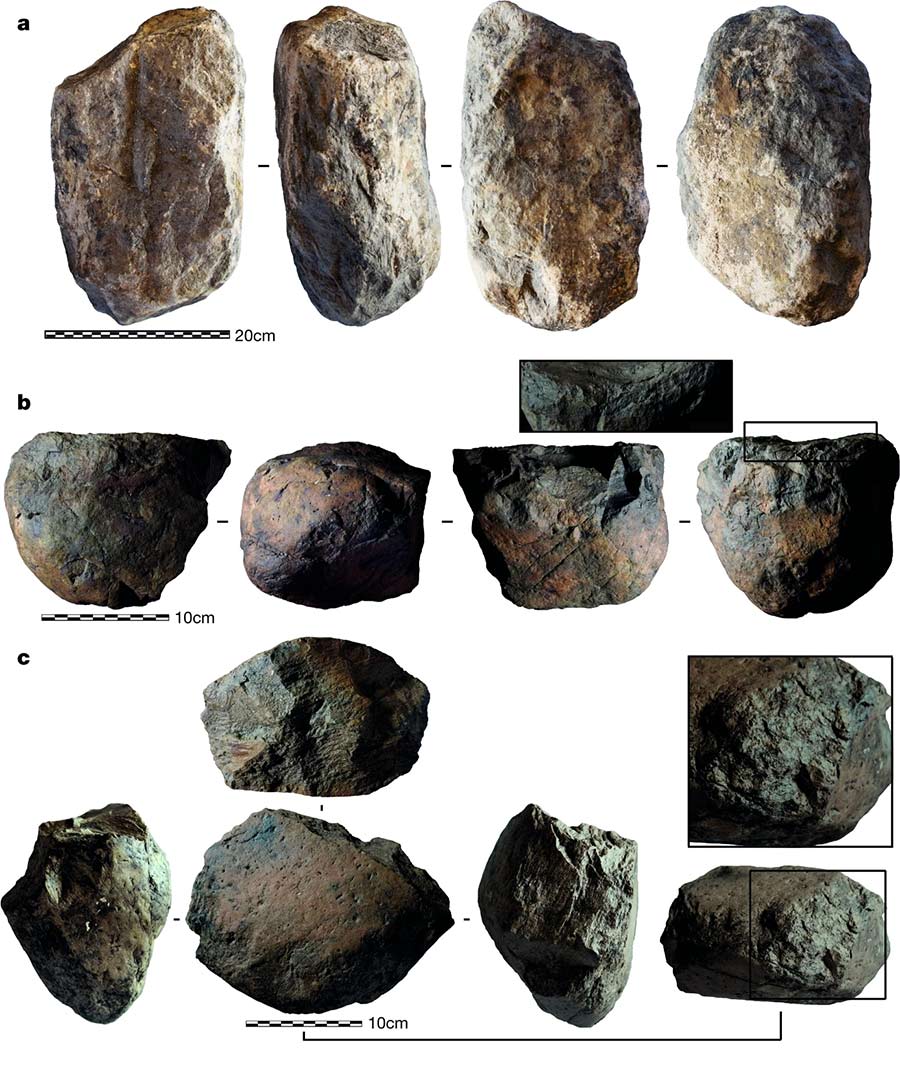
3.3 million year old Lomekwian stone tool use by hominins for marrow removal and flesh cutting: Sonia Harmand, et. al.


200 plus MADE technology as stone tools at over 3 million years old.... 

  In 2010, researchers found fossilized animal bones in Kenya dating to 3.4 million years ago with cut marks on them—possibly made from a stone tool, though still controversial. Australopithecus afarensis (Lucy’s species) was the only human ancestor or relative around at the same time and place. Another hominin, Australopithecus africanus, appears to have had a grip strong enough for tool use. Studies show chimpanzees use rocks as hammers or anvils on their own in the wild, and, with a little guidance, bonobos are capable of creating stone tools.


 https://www.nature.com/articles/nature14464


3.3-million-year-old stone tools from Lomekwi 3, West Turkana, Kenya
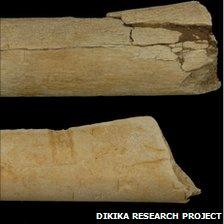
 https://www.bbc.com/news/science-environment-10938453
 Bones found in Ethiopia show cuts from stone and indications that the bones were forcibly broken to remove marrow.

Chris Stringer of the Natural History Museum in London cautions against making firm conclusions about the development of tool use, given the limited number of artifacts from the current find.

"We have to be cautious that these are just a couple of bones with what seem to be cut marks on them; one would like to have stone tools associated with them to really clinch the case," he told BBC News.

However, he agrees that pushing the first known date of tool use back by nearly a million years is, regardless, "a big story".

"It suggests that meat-eating and butchery behaviour is pre-human - it's an ancestral behaviour and as such it gives an interesting perspective on the Australopithecines that we didn't have before," he said.

 3.3 million year stone tools vid

So even though they had SMALL brains the brains grew slowly and the children were trained by their parents as cultural use of tools....

Prolonged brain growth and maturation have often been viewed as a consequence of evolutionary brain size increase in the genus Homo: a shift in life history required to evolve large adult brains despite obstetric constraints related to upright walking (25). In contrast to this view, our data from A. afarensis demonstrate that prolonged brain growth is not a mere by-product of evolutionary brain size increase. One can predict the average neonatal brain size in A. afarensis based on the statistical relationship between the brain size of newborns and adults in anthropoids (26). The pelvic dimensions of the small, presumed female A. afarensis specimen A.L. 288-1 (Lucy) suggest that it would have been possible to give birth to such a predicted A. afarensis neonate, potentially requiring some rotation of the fetus during parturition (26–28). Our findings therefore challenge the central tenet of the obstetric dilemma hypothesis (25) and suggest that obstetric constraints are not the proximate cause of the origins of prolonged brain growth in hominins. This view is in line with an earlier study that emphasized the importance of energetic constraints of the maternal metabolism on fetal growth and gestation length, suggesting that the evolution of altriciality in hominins had little to do with pelvic morphology (29).

The evidence from virtual dental histology shows that the dental development of DIK-1-1 was broadly comparable to that of P. troglodytes and therefore faster than in modern humans, whereas the same individual’s small rEV suggests a prolonged period of brain development relative to chimpanzees. This indicates that the developmental pace of teeth and brain need not always be synchronized and can evolve independently, at least to some degree. The fact that protracted brain growth emerged in hominins as early as 3.3 Ma ago could suggest that it characterized all of subsequent hominin evolutionary history. However, it is possible that patterns of brain development varied among hominins and did not follow a linear evolutionary trajectory toward the modern human condition (5). Among primates in general, different rates of postnatal growth and maturation are associated with different infant-care strategies (30), suggesting that the extended period of brain growth in A. afarensis may have been linked to a long dependence on caregivers (24, 31)

https://www.aljazeera.com/news/2006/9/20/scientists-hail-lucys-daughter 

Some scientists do NOT believe the evidence....  

 https://www.bbc.com/news/science-environment-11756602

Dr McPherron said he was disappointed that the Spanish team had not examined the bones directly - only pictures of them.

"There are quite a few marks on these bones and on a few of them they think that the pattern that you see falls within the range you see for trampling," he said.

"But the point is to explain the totality of the marks on these bones, and the totality fits very well within the pattern for cut-marked, or stone-tool-modified, bones," he told BBC News.

 “I've seen the altered rocks, and there is definitely purposeful modification of the stones by the hominins at the Lomekwi site 3.3 million years ago,” says paleoanthropologist Rick Potts, director of the Smithsonian’s Human Origins Program, who was not affiliated with the study. Potts notes that while the study is exciting, it also raises a lot of big questions.

 Exploring Humanity’s Technological Origins talk by Sonia Harmand, 2023

 Sonia F. Harmand, Associate Professor, Department of Anthropology, Turkana Basin Institute, Stony Brook University; Director, Mission Préhistorique au Kenya/West Turkana Archaeological Project Human evolutionary scholars have long assumed that the earliest stone tools were made by members of the genus Homo, 2.4–2.3 million years ago, and that this technological development was directly linked to climate change and the spread of savannah grasslands. In the last decade, fieldwork in West Turkana, Kenya, has revealed evidence of much earlier technological behavior. Sonia Harmand will discuss the discovery of stone tools in a 3.3-million-year-old archaeological site in Kenya known as Lomekwi 3. She will show how this discovery is reshaping our understanding of the emergence of human-like manipulative capabilities, as well as the development of cognition in early hominins—the group consisting of modern humans and all our immediate ancestors. Presented by Peabody Museum of Archaeology & Ethnology and Harvard Museums of Science & Culture

 Louise Leakey lecture from six months ago


at December 26, 2025 No comments:
Share

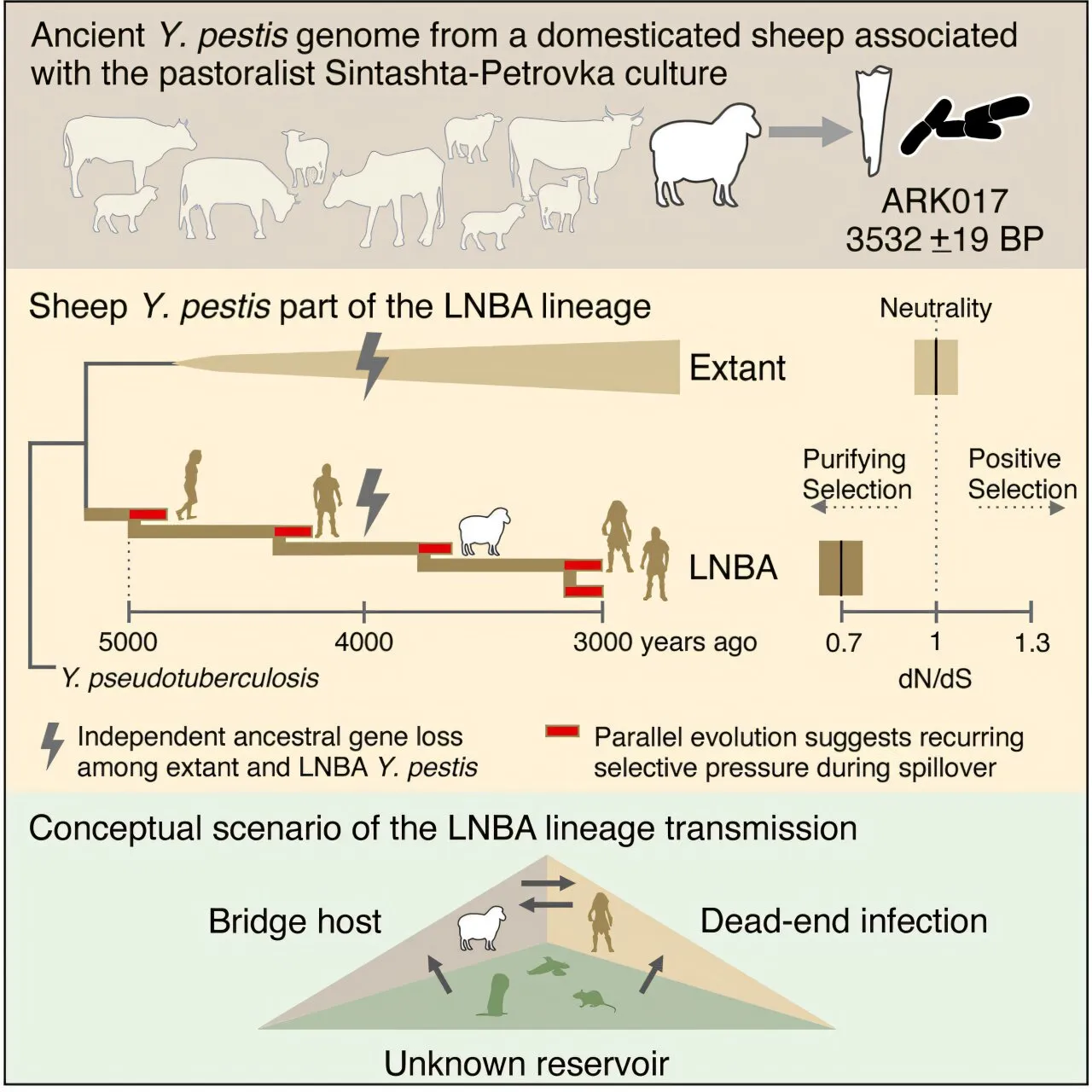
Sheep Herders spread the first plague in the Bronze Age, wiping out the Megalith structure building farmers of Europe


The most infamous plague in history has a familiar cast of characters. Yersinia pestis rides on fleas. Fleas ride on rats. Humans pay the price. This script fits the medieval Black Death so well that it has become a template for imagining all past pandemics.

But the Bronze Age version of plague refuses to follow that plot.

 yeah so the herders spread the plague via their sheep - fascinating


at December 26, 2025 No comments:
Share

Wednesday, December 24, 2025

50 million in modern day slavery: Nubile nimble young female fingers preferred in global apparel and farm industry

 On the other hand, the “nimble fingers” no longer belong to Slovenian women; these “nimble fingers” are in Asia now. Race has become an important constituent of this skill in the Slovene public mindset and forms part of discussions about globalization....The notion of nimble fingers, mainly presented in relation to female textile workers, is not valued in the contemporary global world. Albeit not valued highly in today’s labor market, nimble fingers are still relevant at the shop floor level. Workers’ definition of nimble fingers is however different and extends beyond purely bodily explanations: it is not merely about fingers, it also implies the knowledge to adapt quickly and be flexibile. These
characteristics are all interdependent, intensively interconnected and relate to one’s ability
and knowledge to “know the machine,” to know the way it reacts and also potential reactions
of different material processed through it. The knowledge of how to operate machines and
long working hours are important factors on the shop floor

80% of the global textile workforce is female

 https://www.nuffieldscholar.org/sites/default/files/2021-05/Tamara%20Uebergang_Nuffield%20Report_FINAL.pdf

Farmers of Fashion

Mentioned specifically in the “Fixing Fashion: Clothing Consumption and Sustainability”
report from the Environmental Audit Committee in UK Parliament (2018); Modern slavery is
cited as one of the major issues in the fashion supply chain. “It is a widely accepted fact that the nubile fingers of children are preferred in the organic cotton fields of India” (Press, C.,
pers. comm., 2018).
Many companies now conduct self-imposed supply chain audits and addressed problematic
business partners. If brands are not actively distancing themselves from certain production
regions or practices, they are condemned as complicit.
Nuffield Farming Scholarships
https://www.nuffieldscholar.org › default › files
PDF
“It is a widely accepted fact that. Page 21. 21 the nubile fingers of children are preferred in the organic cotton fields of India”

 https://pubmed.ncbi.nlm.nih.gov/30665456/

Results: The female workers reported that their work has led to back and joint pain, continuous headache, eye pain and difficulty in breathing associated with inhaling fabric dust. Inadequate lighting, constantly sitting in one position without back rest and continuous noise from hundreds of machines makes them feel permanently tired. Further, the female workers reported that working in the factory and meeting the expectations of the families at home has doubled their workload. The doctors indicated that the physical work environment, their low job status and the nature of the job affect the health of female workers.

Conclusion: This study found that female workers in the ready-made garment industry face a high risk of health problems. Both government and non-government organizations need to be better involved in designing interventions targeting these women, to protect them from such health risks. In addition, recognition by the whole society of the important role the women play in the economy is needed, so that support by both family and society can be improved.

 the production quotas are so high that they routinely
work ten to twelve hours to meet the quota. The extra
hours to meet the quota should be paid according to the
regulations, but not all factories participating in this
study fulfil this obligation. The female workers reported
that they also do not refuse to do paid overtime (above
the normal hours) as they can earn some extra money.
However, these extra hours of work make them feel sick.
Female workers reported that they suffer from headaches,
eye complaints, body aches, and fatigue. They further re-
ported that these physical illnesses have become ‘normal’
in their lives and they can live without treatment.

 https://english.elpais.com/society/2023-01-03/the-dark-side-of-textiles-my-fingers-were-bleeding-but-they-forced-me-to-work.html

 She worked 12-15 hours a day with no labor rights. “My fingers were bleeding, but they forced me to work grueling hours for less than two dollars a day,” she said. The rules were simple – no pay unless they finished the entire job. They played loud music to keep workers from falling asleep, and splashed cold water on their faces to wake them up.

 Food was very scarce, and she was always pulling threads from her mouth when she ate. Chemical fumes sometimes stifled her breathing. At the end of the workday, she would collapse on the mountains of clothes she used as a bed. “We were fed like animals and worked like machines.”

“We are the invisible, slaves who are living, working and dying in sweatshops, and the same will happen to our children.”

A million signatures for a living wage

Sheikh’s tale of modern-day slavery is not unique. According to the International Labor Organization (ILO), nearly 50 million people are victims of this type of exploitation, a toll that has increased in recent years, and 12% of them are children.

 Representations of the textile industry are
strongly interrelated with gender relations and ideologies: nimble fingers are one such
example. Even though not as highly valued in the present globalizing world, nimble fingers
are an important constituent in the identity construction of female textile workers on the shop
floor of a still-operating factory in Slovenia. This article focuses on female textile workers’
experiences of postsocialist transformation in this factory while addressing changing
meanings of work and skill in relation to the body and notions of femininity.

(PDF) From Nimble fingers to tired bodies


ResearchGate
https://www.researchgate.net › publication › 27627291...
May 14, 2015 — Representations of the textile industry are strongly interrelated with gender relations and ideologies: nimble fingers are one such example.....with feelings of fear about
an uncertain future, lack of social acceptance and isolation, fears of
social stigma and being burdens on their families, our women of the
nimble fingers have become terrible victims of such a disaster.
 

Endless Misery of Nimble Fingers: The Rana Plaza Disaster


The Asian Disaster Preparedness Center (ADPC)
https://www.adpc.net › Igo › category › doc
PDF
by S AKHTER · 2014 · Cited by 38 — In search of better luck and lives, poor women from rural Bangladesh come to urban areas of the country to work in the garments industry.
11 pages
Missing: apparel ‎textile .in late 2019, the industry’s export turnover reached 33.07 billion USD, with more than 4,500 factories and 4.2 million workers.[1] Equally well known are the dramatically poor working conditions of garment workers in small, crowded and dangerous factories, and that these super-exploited workers are primarily young women....The garment workforces were not only largely women, but they were also young – a good number even minors – and they were rural migrants, pushed to the garment hubs in Dhaka and Chittagong by an agrarian crisis that increased the share of landless households in the overall population from 32.8 percent in 1977 to 45 percent in 1984.[11] In the eyes of garment factory owners and the urban elite to whom they belonged, garment workers were thus sojourners who would work a few years in urban garment factories, but would eventually return to their villages and marry, with their savings from garment work paying for their dowry – as garment factory owners habitually told these women’s parents in the 1980s. Because of these social characteristics, the urban elite expected the garment workforce to be nimble-fingered, patient, and docile.

Of 'nimble fingers' and 'jacquard's soldiers': Up-scaling, Up ...


TRAFO – Blog for Transregional Research
https://trafo.hypotheses.org › ...
Jul 23, 2021 — Of 'nimble fingers' and 'jacquard's soldiers': Up-scaling, Up-skilling, and the Re-masculinization of Labor in Bangladesh's Garment Industry.

Nimble Fingers: From 19th Century New England Mills to ...


jstor
https://www.jstor.org › stable
by L Reese · 1988 · Cited by 2 — The work on all assembly lines is stressful, and when production deadlines are set, the women are often forced to work overtime. In an environment reminiscent ...
Missing: apparel ‎| Show results with: apparel

When Nimble Fingers Make A Fist


New Internationalist
https://newint.org › features › 1995/01/05 › nimble
Jan 5, 1995 — Arunee Srito, a well-known Thai woman activist, was one of those targeted by management at Thai Durable Textile for a strike in July 1993.
Missing: apparel ‎| Show results with: apparel

Social Fabric: Land, Labor, and the World the Textile Industry ...


Cornell University
https://exhibits.library.cornell.edu › feature › female-labor
Women were seen as ideally suited to work in the early textile industry in the United States. They were associated with the domestic arts of weaving, darning, ...
Missing: "nimble ‎fingers ‎apparel


Nimble Fingers: From 19th Century New England Mills to 20th Century Global Assembly Lines

Lyn Reese

OAH Magazine of History
Vol. 3, No. 3/4, Special Double Issue on Women's History and History of the 1970s (Summer - Fall, 1988),
at December 24, 2025 No comments:
Share
‹
›
Home
View web version
Powered by Blogger.